
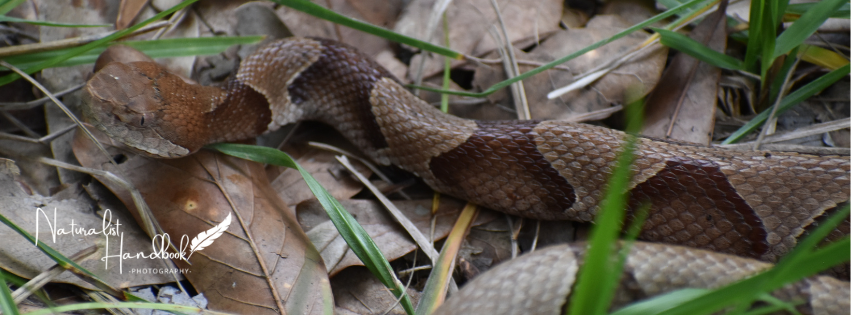

Venomous Snakes of the Texas Gulf Coast
Venomous snakes are a natural part of life along the Texas Gulf Coast. They inhabit forests, wetlands, coastal prairies, suburban neighborhoods, gardens, and even areas around homes.
Most snake encounters end with the snake quietly slipping away. Snakes do not hunt or chase people, and most bites occur when a snake is surprised, cornered, stepped on, or handled. Learning to recognize local species makes it easier to respond with caution rather than panic.
The venomous snakes of the Texas Gulf Coast fall into four main groups: copperheads, cottonmouths, coral snakes, and rattlesnakes. These groups differ in appearance, habitat, behavior, and venom, but all should be observed from a safe distance.
Quick Facts About Texas Gulf Coast Venomous Snakes
- Main groups: Copperheads, cottonmouths, coral snakes, and rattlesnakes
- Common habitats: Woodlands, wetlands, coastal marshes, prairies, brush piles, and suburban yards
- Most important safety rule: Never touch, corner, or attempt to kill a snake
- Best response: Stop, locate the snake, and slowly back away
- If bitten: Seek emergency medical care immediately
- Ecological role: Control rodents and other small animals
Only a small portion of Texas snake species are venomous. The majority are harmless and play important roles in local ecosystems.
Are Snakes Venomous or Poisonous?
Snakes that inject toxins through a bite are venomous, not poisonous.
A poisonous animal causes harm when it is eaten or touched. A venomous animal delivers venom through a bite, sting, fang, or spine. Snakes are venomous, not poisonous. Venom is actively delivered through a bite, sting, or spine, while poison causes harm when it is eaten, touched, or absorbed. Copperheads, cottonmouths, coral snakes, and rattlesnakes inject venom through specialized fangs.
Although “poisonous snake” is commonly used in conversation, venomous snake is the more accurate term. An easy way to remember the difference is this: if it bites you, it is venomous; if you bite it, it is poisonous.
A Rare Exception: Both Venomous and Poisonous
Nature rarely follows tidy rules. The tiger keelback (Rhabdophis tigrinus) of East Asia is both venomous and poisonous. It delivers venom through rear fangs, but it also stores toxins obtained from eating poisonous toads. These toxins collect in specialized glands along the snake’s neck and can be released as a defense against predators. The tiger keelback is often called the world’s only poisonous snake, although several related Rhabdophis species appear to use the same remarkable strategy.
What Venomous Snakes Live Along the Texas Gulf Coast?
The exact species present can vary across the long Texas coastline. Habitat also changes from the wooded upper coast to the drier southern coastal plains.
However, residents and visitors are most likely to hear about four major groups.
Southern Copperhead
The southern copperhead is one of the best-camouflaged snakes in Texas. Its reddish-brown markings blend almost perfectly with fallen leaves, pine needles, and forest debris.
Copperheads are generally found in wooded areas, rocky habitats, stream corridors, and bottomland forests. They can also adapt to wooded suburban neighborhoods.
How to Identify a Copperhead
Look for:
- A tan, peach, or light brown background color
- Dark reddish-brown crossbands
- Bands shaped like hourglasses when viewed from above
- Wide bands along the sides that narrow across the back
- A copper-colored head
- A relatively thick body
- A bright yellow or greenish tail tip on young snakes
The hourglass pattern is usually the most useful feature. The narrowest part of each marking crosses the center of the snake’s back.
Copperheads often remain motionless when approached. Their camouflage is so effective that a person may not notice one until they are already close.
Learn more about the Southern Copperhead
Cottonmouth
The cottonmouth is also called the water moccasin. It is a heavy-bodied pit viper associated with swamps, ponds, slow waterways, rivers, coastal marshes, and other wet habitats.
Cottonmouths occur across the eastern half of Texas. Younger snakes often have bold bands, while older individuals may become very dark brown, olive, or nearly black.
How to Identify a Cottonmouth
Look for:
- A thick, muscular body
- Dark brown, olive, or black coloration
- Wide crossbands that may be faint in older snakes
- A dark stripe passing through the eye
- Pale cream or white coloring around the jaw
- A blunt, blocky head
- A bright yellow or greenish tail tip on juveniles
- A white mouth lining displayed when threatened
The famous white-mouth display is defensive. A frightened cottonmouth may coil, raise its head, and open its mouth to warn a potential threat.
Not every cottonmouth will display its mouth. Likewise, a snake swimming in a pond is not automatically a cottonmouth.
Several harmless watersnakes share the same habitat and are frequently mistaken for water moccasins. Broad-banded, diamondback, and plain-bellied watersnakes are among the common sources of confusion.
Learn how to identify a Cottonmouth
Texas Coral Snake
The Texas coral snake looks quite different from the heavy-bodied pit vipers. It has a slender body, a small head, round pupils, and brightly colored rings.
Coral snakes occur across much of southeastern Texas, including woodlands and coastal plains. They frequently shelter beneath leaf litter, logs, rocks, and other ground cover.
How to Identify a Texas Coral Snake
Look for:
- Complete rings around the body
- Broad red and black bands
- Narrow yellow bands
- Red bands touching yellow bands
- A black snout and head
- A small head that is not much wider than the neck
- A slender body
- Usually less than 30 inches long
The familiar “red touches yellow” rhyme describes the typical Texas coral snake pattern, but it should not be treated as a universal identification rule. Unusual color patterns can occur, and the rhyme does not work reliably outside the United States.
Coral snakes are secretive and usually attempt to escape. Bites are uncommon and often involve someone deliberately picking up or handling the snake. However, their venom can affect the nervous system, and every suspected bite requires immediate medical evaluation.
Rattlesnakes
Rattlesnakes are represented by several species in Texas. Which species occur near the Gulf Coast depends on location.
The western diamondback is widespread across much of Texas. It has dark diamond-shaped markings and alternating black-and-white rings near the end of its tail.
The timber rattlesnake, sometimes called the canebrake rattlesnake, occurs in the eastern portion of the state. It favors wooded bottomlands and other moist forest habitats.
How to Identify a Rattlesnake
Depending on the species, look for:
- A rattle or rounded button at the end of the tail
- A thick body
- Keeled scales that create a rough appearance
- Dark blotches, diamonds, or crossbands
- Heat-sensing pits between the eyes and nostrils
- A distinct neck behind the head
Never depend entirely on hearing a rattle. A rattle may be damaged or missing, and a rattlesnake does not always sound a warning before defending itself.
Do Not Rely on Head Shape Alone
The popular rule that venomous snakes have triangular heads is unreliable.
Many harmless snakes flatten their heads when frightened, giving them a broad or triangular appearance. Coral snakes are venomous but have small, rounded heads that are barely wider than their necks.
Pupil shape is also a poor field identification tool. Getting close enough to examine a snake’s eyes defeats the entire purpose of safe identification.
Instead, consider several visible features together:
- Body pattern
- Overall build
- Tail markings
- Habitat
- Geographic range
- Behavior
A photograph taken with a zoom lens from a safe distance is far more useful than leaning closer for a look at the snake’s face.
Common Harmless Snakes Mistaken for Venomous Snakes
Many harmless Texas snakes are killed because they resemble venomous species.
Watersnakes
Many watersnakes are often confused with cottonmouths because both can have thick bodies and dark crossbands. Watersnakes may also flatten their heads when threatened.
A watersnake swimming across a pond or basking beside a bayou should not automatically be labeled a water moccasin.
Rat Snakes
Young rat snakes have dark blotches that may cause them to be mistaken for copperheads or rattlesnakes. Adult Texas rat snakes may also flatten their heads and vibrate their tails when frightened.
Milk Snakes and Scarlet Snakes
These harmless snakes may have red, black, and pale bands. Their patterns can resemble coral snakes at a glance.
Rather than handling a snake to examine its markings, take a photograph from a distance and allow it to move away.
Where Are Venomous Snakes Most Often Encountered?
Venomous snakes can appear in natural areas and around human structures.
Common hiding places include:
- Wood and brush piles
- Stacked lumber
- Fallen logs
- Thick leaf litter
- Tall grass
- Rock piles
- Storage sheds
- Livestock buildings
- Overturned boats
- Tarps and outdoor equipment
- Creek banks
- Pond edges
- Debris left after storms
Snakes enter these areas while searching for shelter, cooler temperatures, moisture, or prey. Rodents, frogs, lizards, and other small animals can make a property more attractive to them.
How to Reduce Snake Encounters Around Your Home
A perfectly snake-proof yard does not exist, especially near wetlands or natural habitats. However, a few changes can reduce attractive hiding places.
- Keep grass trimmed around frequently used areas.
- Move wood and brush piles away from the house.
- Remove unused boards, roofing materials, and debris.
- Seal openings around garages, sheds, and foundations.
- Control rodent food sources.
- Wear gloves when moving landscaping materials.
- Use a flashlight when walking outside at night.
- Never reach beneath an object without looking first.
When stepping over a log, look at the ground on the opposite side before placing your foot. Wear boots and long pants when working in dense vegetation or moving debris.
What Should You Do When You See a Venomous Snake?
Stop and determine where the snake is located. Then slowly increase the distance between yourself and the animal.
Do not:
- Touch it
- Poke it
- Attempt to move it
- Corner it
- Throw objects at it
- Try to kill it
- Allow children or pets to approach
Most snakes will leave once they have a safe escape route. Trying to kill or capture a venomous snake brings a person directly within striking distance and greatly increases the chance of being bitten.
A qualified wildlife professional can remove a snake that has entered a home or cannot safely leave on its own.
What Should You Do After a Snakebite?
Treat every bite from an unknown or potentially venomous snake as a medical emergency.
Do:
- Call 911 or seek emergency medical care immediately.
- Remain as calm and still as possible.
- Sit or lie down.
- Remove rings, watches, and tight clothing before swelling begins.
- Wash the area gently with soap and water.
- Cover it with a clean, dry dressing.
- Mark the edge of visible swelling and note the time.
- Photograph the snake from a safe distance only when doing so creates no additional risk.
- Have someone else drive to the hospital.
Do not:
- Apply a tourniquet.
- Cut the wound.
- Attempt to suck out the venom.
- Apply ice.
- Use an electric shock device.
- Attempt to capture or kill the snake.
- Wait for symptoms before seeking help.
- Drive yourself to the hospital.
Modern medical care and antivenom provide the safest treatment. Folk remedies and suction devices do not remove a meaningful amount of venom and may worsen tissue damage.
In the United States, Poison Control can be reached at 1-800-222-1222. This service is free and available 24 hours a day.
Why Venomous Snakes Matter
Venomous snakes can be dangerous, but they are not villains.
They help control rats, mice, and other small animals. In turn, snakes provide food for hawks, owls, mammals, and other predators. Removing snakes from an ecosystem can disrupt those natural relationships.
Their presence also tells us something about the habitat. A healthy population of snakes requires suitable shelter, prey, and functioning food webs.
Respecting venomous snakes does not require approaching them. Often, the best form of appreciation is simply allowing one to continue on its way.
Frequently Asked Questions
What is the most common venomous snake on the Texas Gulf Coast?
The answer depends on the habitat and exact location. Copperheads are frequently encountered in wooded areas, while cottonmouths are closely associated with wetlands and slow-moving water. Coral snakes are more secretive, and rattlesnake distribution varies across the coast.
Will a cottonmouth chase a person?
Cottonmouths may stand their ground or move toward nearby shelter, which can be misinterpreted as chasing. They are defensive animals and generally prefer escape when a route is available.
Can venomous snakes climb?
Yes. Some venomous snakes can climb low shrubs, fallen limbs, or rough surfaces. However, many snakes seen dropping from branches over water are harmless watersnakes escaping into the water below.
Are baby venomous snakes more dangerous than adults?
Young venomous snakes can deliver medically significant bites and should be treated with the same caution as adults. The common claim that young snakes cannot control their venom does not make them universally more dangerous.
Should I kill a venomous snake in my yard?
No. Keep people and pets away, allow the snake an escape route, or contact a trained wildlife professional. Attempting to kill the snake places you much closer to it and increases the likelihood of a bite.
Can a dead snake still bite?
Reflexive movement can continue after death, and the head may still be capable of delivering venom. Never handle a dead venomous snake or a severed snake head.
Naturalist’s Note
Venomous snakes often inspire an immediate reaction. A flash of patterned scales in the leaves or the sudden buzz of a rattle can stop a person in their tracks. That response is understandable. These animals deserve caution, but caution does not have to become fear.
Most venomous snakes rely on camouflage long before they rely on venom. A copperhead can vanish against a forest floor. A cottonmouth may disappear along a muddy shoreline. A coral snake can slip beneath leaf litter in seconds, while a rattlesnake may remain perfectly still among dry grass and rocks. Their first defenses are usually concealment, stillness, warning, and escape.
When a snake bites, it is often because the animal has been stepped on, cornered, handled, or threatened. From the snake’s perspective, a human is an enormous predator. Venom is valuable, and using it defensively comes with risk. Given enough space, most snakes would rather retreat than confront us.
Venomous snakes also perform essential work within their habitats. They control rodents, frogs, fish, lizards, and other small animals. In turn, they provide food for hawks, owls, kingsnakes, mammals, and even alligators. Their presence is part of a functioning food web, not a flaw in the landscape.
Learning to identify these snakes changes the way we experience an encounter. Instead of reacting with panic, we can pause, observe from a safe distance, and allow the animal to move on. Knowledge does not remove the need for caution, but it replaces unnecessary fear with understanding.
The safest and most respectful response is often the simplest: watch where you place your hands and feet, give the snake room, and let it remain part of the wild place where it belongs.
Individual Venomous Snake Guides
This guide provides an overview of the venomous snakes of the Texas Gulf Coast. Visit the individual species profiles for detailed identification, behavior, habitat, and comparison information:
- Southern Copperhead: The Camouflaged Snake of the Forest Floor
- Cottonmouth: How to Identify the Texas Water Moccasin
- Texas Coral Snake: A Secretive Snake with Warning Colors
- Texas Rattlesnakes: From our friends at TPWD, a guide to identify native Rattlesnakes